

UAE Net Zero 2050: What Businesses Must Do Now (2026 Guide)
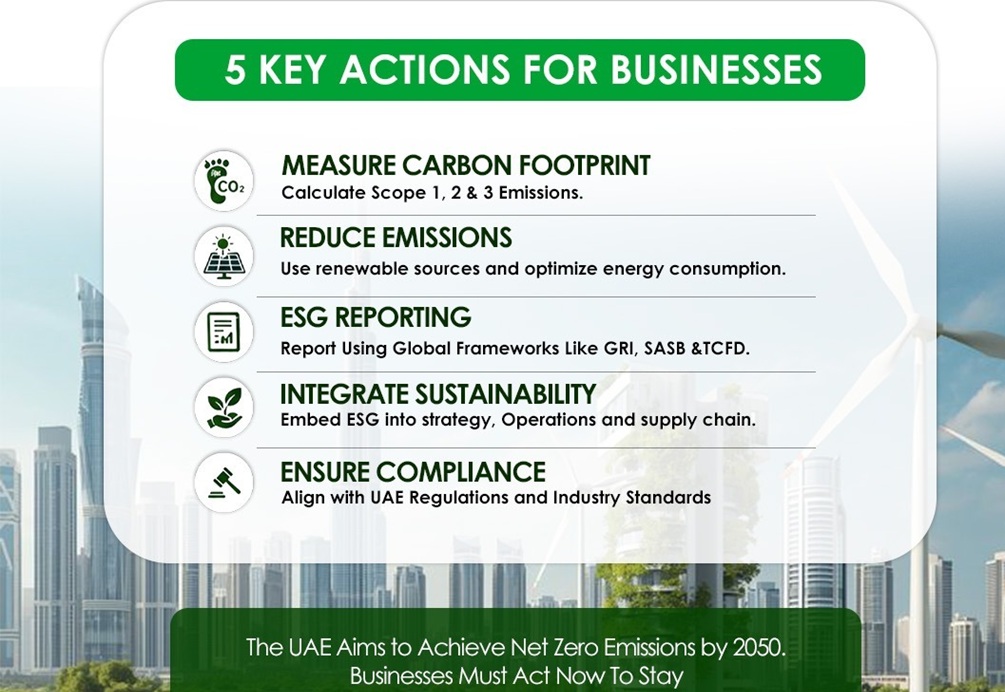
The UAE has made a bold commitment to achieve Net Zero emissions by 2050, becoming the first country in the Middle East to announce such a target. This shift is not just a government initiative—it directly impacts how businesses operate, report, and grow.
Companies across industries are now expected to align with sustainability goals, reduce carbon emissions, and integrate ESG strategies into their operations.
If your business is not preparing now, you risk falling behind in compliance, competitiveness, and investor confidence.
What is UAE Net Zero 2050?
UAE Net Zero 2050 is a national strategic initiative aimed at reducing greenhouse gas emissions to net zero by the year 2050.
This means:
• Emissions produced = Emissions removed or offset
The initiative focuses on:
• Clean energy transition
• Carbon reduction
• Sustainable economic growth
Why Net Zero Matters for Businesses in UAE
✔ Regulatory Pressure is Increasing
Environmental laws and ESG compliance requirements are tightening
✔ Investor Expectations
Investors now prioritize ESG-aligned companies
✔ Market Competitiveness
Sustainable businesses win more contracts and partnerships
✔ Cost Efficiency
Energy optimization reduces long-term costs
Key Business Requirements Under Net Zero 2050
To align with UAE sustainability goals, businesses must take structured actions.
✅ 1. Measure Carbon Footprint
Start by calculating:
• Scope 1 emissions
• Scope 2 emissions
• Scope 3 emissions
👉 This is the foundation of all ESG and sustainability efforts.
✅ 2. Implement Emission Reduction Strategies
Focus on:
• Energy efficiency improvements
• Renewable energy adoption
• Process optimization
✅ 3. ESG Reporting & Disclosure
Businesses must report sustainability performance using global frameworks such as:
• GRI
• SASB
• TCFD
✅ 4. Sustainability Integration
Embed sustainability into:
• Business strategy
• Operations
• Supply chain
✅ 5. Compliance with UAE Regulations
Ensure alignment with:
• Environmental laws
• Industry-specific standards
• ESG compliance requirements
Industries Most Impacted
Some sectors face higher pressure under Net Zero 2050:
• Construction & Real Estate
• Manufacturing
• Oil & Gas
• Logistics & Transportation
These industries must act faster due to higher emissions.
🚫 Risks of Ignoring Net Zero Alignment
❌ Regulatory Penalties
❌ Loss of Contracts
❌ Investor Withdrawal
❌ Brand Reputation Damage
In the UAE, sustainability is quickly becoming a business requirement, not an option.
Step-by-Step: How Businesses Can Align with Net Zero 2050
🔹 Step 1: Conduct ESG & Carbon Assessment
Evaluate current emissions and sustainability performance
🔹 Step 2: Define Net Zero Strategy
Set realistic emission reduction targets
🔹 Step 3: Implement Sustainability Initiatives
• Energy optimization
• Waste reduction
• Green procurement
🔹 Step 4: Monitor & Track Performance
Use tools and systems to measure progress
🔹 Step 5: Report & Communicate
Disclose ESG performance to stakeholders
Practical Actions You Can Take Today
• Switch to energy-efficient systems
• Reduce operational waste
• Optimize logistics and transportation
• Train employees on sustainability practices
• Partner with ESG consultants
Ready to Align with UAE Net Zero 2050? Get expert support to build your sustainability strategy and achieve ESG compliance.
👉 Book a Free ESG Consultation
👉 Start Your Net Zero Journey Today
Frequently Asked Questions
What is Net Zero 2050 UAE?
It is the UAE’s commitment to achieve zero carbon emissions by 2050.
Is Net Zero mandatory for businesses?
While not fully mandatory yet, regulations and ESG requirements are increasingly enforcing compliance.
How can businesses achieve Net Zero?
By measuring emissions, reducing carbon output, and adopting sustainable practices.
What industries are most affected?
Construction, manufacturing, oil & gas, and logistics.