

The Countdown to ISO 14001:2026: Why Your Environmental Documentation Needs an Urgent Climate Action
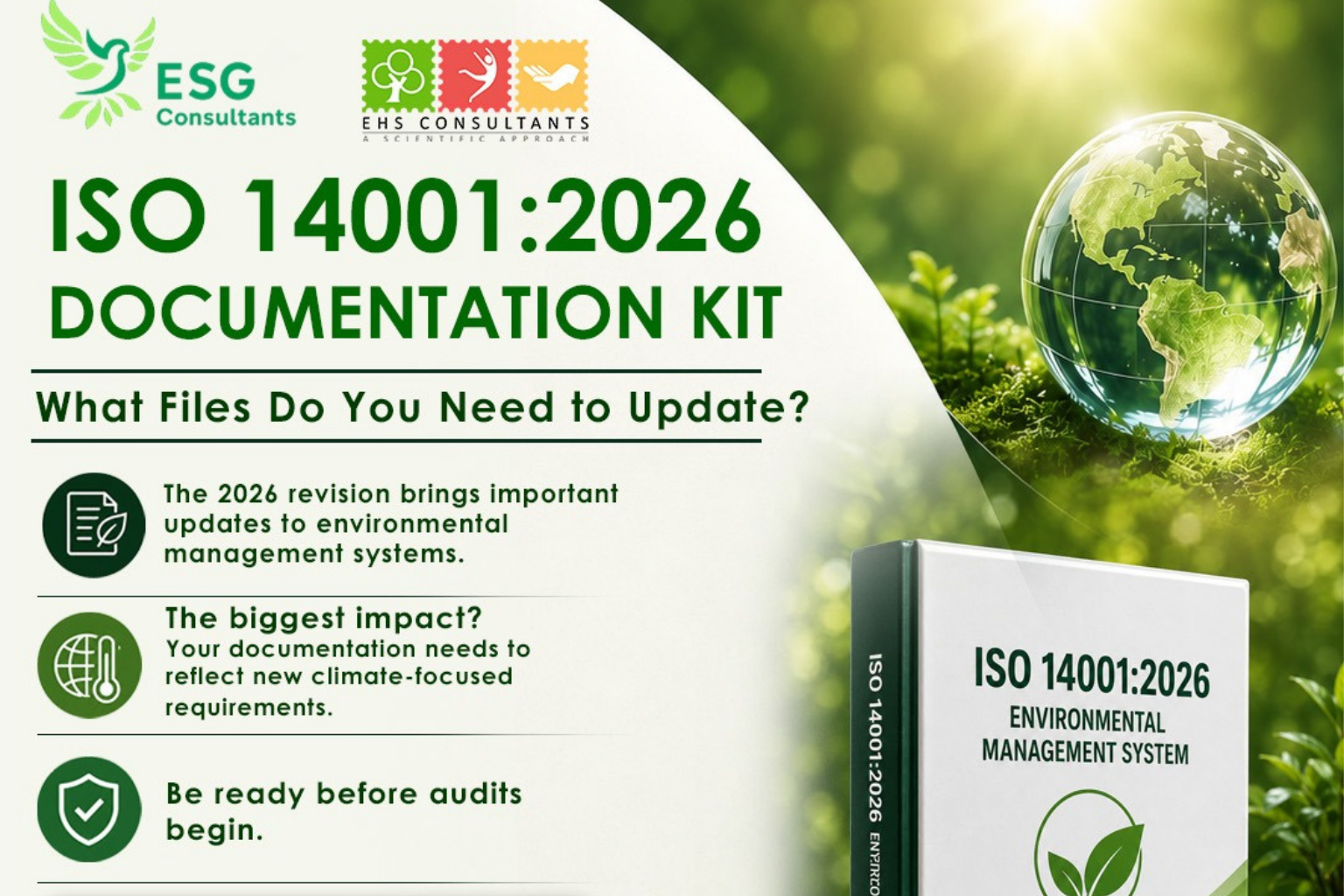
As the UAE continues to spearhead sustainable growth in the Middle East—demonstrated by national initiatives like the UAE Net Zero 2050 strategic vision—the regulatory landscape for corporate sustainability is shifting fast. For businesses holding ISO certification, these changes are about to become strictly enforced.
The international standard for Environmental Management Systems (EMS) is undergoing a critical revision: ISO 14001:2026.
This revision brings profound updates that every certified organization must address before audits begin.
The biggest takeaway? Generic environmental policies are no longer enough. The updated standard mandates that businesses hard-code climate-focused requirements directly into their operational documentation.
The central question for quality managers and sustainability officers across Dubai, Abu Dhabi, and the wider UAE is clear: What files do you need to update to remain fully compliant tomorrow?
The Big Shift: From Basic Environmental Impacts to Climate Action
The 2026 update to ISO 14001 shifts focus from simple operational impacts to comprehensive climate adaptation. While earlier standard versions concentrated on how your operations affect the immediate environment (such as waste generation and spill management), ISO 14001:2026 requires a proactive look at how climate change impacts your business resilience and value chain.
To pass future transition audits, your documentation must clearly reflect your strategy to manage, mitigate, and adapt to climate-related risks.
What Files Do You Need to Update? The Audit Trail Checklist
A seamless transition begins with a structured review of your current Environmental Management System. Based on the ISO 14001:2026 update criteria, here are the six primary documentation files that require immediate revision:
1. Environmental Policy
Your core policy statement must be updated to explicitly address climate change as a key risk factor. This means committing top management to measurable climate action, carbon reduction goals, and alignment with UAE sustainability frameworks.
2. Register of Aspects & Impacts
The revised standard requires a broader evaluation of value-chain impacts. You must update your aspects and impacts register to cover extended environmental risks, including upstream supply chain emissions (Scope 3), raw material lifecycle impacts, and logistics carbon footprints.
3. Objectives & Targets
Vague environmental goals are no longer sufficient. Objectives must now be quantifiable, science-based, and tied to strict timelines.
For example, transition from a general target like "reduce electricity usage" to a documented goal like "reduce Scope 1 and Scope 2 emissions by 15% by Q4 2027."
4. Operational Procedures
Standard Operating Procedures (SOPs) must integrate climate risk management. Procurement procedures need criteria for evaluating vendor environmental impact, while emergency response protocols must account for climate-induced risks such as extreme weather and flooding.
5. Environmental Records & Metric Tracking
Auditors will demand verifiable, auditable data. You will need structured record-keeping systems for greenhouse gas (GHG) accounting, energy management metrics, and verified waste diversion rates.
6. Supplier Engagement Records
One of the most significant focus areas is Supplier Engagement. You must maintain documented proof that you are actively monitoring, and engaging suppliers based on their environmental management practices and climate readiness.
Why You Must Act Before Audits Begin
Remediating non-conformities during an active ISO audit is costly and can put your certification status at risk. Updating a complete EMS documentation set requires time for risk assessments, internal training, and gathering implementation records.
By starting your updates now, you guarantee that when external auditors arrive, your organization can present a fully documented, fully compliant system that meets every new climate requirement.
Partner with ESG Consultants UAE for a Seamless ISO 14001:2026 Transition
Navigating the updates from ISO 14001:2015 to ISO 14001:2026 requires specialized expertise in environmental compliance, carbon accounting, and local UAE regulations.
At ESGCONSULTANTS, we help companies across the UAE transition smoothly without operational downtime.
How We Help Your Business:
✅ ISO 14001:2026 Gap Analysis: A comprehensive review
of your existing EMS documentation against new climate criteria.
✅ Custom Documentation Kits: Tailored updates to your
policies, procedures, aspects registers, and engagement records.
✅ Internal Auditor Training: Up skilling your team to
inspect and maintain compliance against 2026 standards.
✅ Supply Chain Vetting Frameworks: Designing practical
processes to evaluate vendor sustainability.
Document Today. Comply Tomorrow. Secure your business continuity and strengthen your market standing in the UAE's green economy.
Get Compliant Today
Ready to update your Environmental Management System for ISO 14001:2026?
Speak directly with our team of certified ESG and ISO experts in the UAE.
Direct Call / WhatsApp: +971 524169197
Website: esgconsultants.ae
Frequently Asked Questions (FAQs): ISO 14001:2026 Transition
ISO 14001:2026 is the latest revised standard for Environmental Management Systems (EMS). While the 2015 version focused primarily on an organization’s direct impact on the environment, the 2026 revision explicitly integrates climate change adaptation and mitigation. It requires businesses to actively evaluate how climate risks affect their strategy, operations, and extended supply chain.
In line with global sustainability directives and local initiatives like the UAE Net Zero 2050, standards bodies are requiring certified organizations to take concrete climate action. The update ensures that Environmental Management Systems are equipped to handle modern climate risks, carbon reporting demands, and supply chain vulnerabilities.
To pass upcoming audits, your business will need to update six key areas of documentation:
✅ 1. Environmental Policy (incorporating explicit climate commitments)
✅ 2. Register of Aspects & Impacts
(expanding to Scope 3 / supply chain impacts)
✅ 3. Objectives & Targets
(setting measurable, climate-focused goals)
✅ 4. Operating Procedures
(integrating climate risk into procurement and emergency response)
✅ 5. Environmental Records
(detailed tracking for carbon and energy metrics)
✅ 6. Supplier Engagement Records
(verifying vendor environmental compliance)
One of the key emphasis areas in the 2026 update is Supplier Engagement. Certified businesses can no longer look at their facilities in isolation. You will need documented processes to assess, monitor, and verify the environmental standards and climate readiness of your suppliers and contractors.
Immediately. Updating a complete EMS documentation suite requires risk assessments, protocol changes, and gathering actionable implementation data. Preparing well before your transition audit ensures you avoid costly non-conformities and certification delays.
We offer end-to-end support for UAE businesses, including:
✅ Gap Analysis: Benchmarking your current EMS against
the 2026 climate criteria.
✅ Documentation Kits: Tailoring policies, procedures,
and tracking registers to your industry.
✅ Internal Auditor Training: Preparing your team for
new climate-focused audit protocols.
✅ Supply Chain Vetting: Establishing frameworks to
evaluate vendor sustainability.
Have More Questions About Your ISO Certification?
Speak directly with our team of certified ESG and ISO compliance experts in the UAE:
Call / WhatsApp: +971 524169197
Website: esgconsultants.ae
Book Your FREE ESG Readiness Assessment Today.
Contact Information
Website: https://www.esgconsultants.ae
Email: info@esgconsultants.ae
Phone: +971 52 416 9197